1777 N Bellflower Blvd #213, Long Beach, CA 90815

If your dentist recently told you that you need a crown, you might be feeling confused or even a little nervous. Understanding why your dentist recommended a crown — and what you need to know in Long Beach — can make the entire process feel far less overwhelming. Dr. Anthony Mark Saad at Long Beach Dental Health sees patients every week who have questions about this common recommendation. This article breaks down the most frequent clinical reasons a crown becomes necessary, so you can feel confident moving forward.
What Is a Dental Crown and Why Does It Matter?
A dental crown is a tooth-shaped cap placed over a damaged or weakened tooth. It restores the tooth’s shape, size, strength, and appearance. Crowns protect teeth that fillings or other treatments can no longer adequately support. They are one of the most reliable restorations available in general dentistry today.
Crowns are not recommended lightly. Your dentist will only suggest one when a tooth is genuinely at risk. Knowing the specific reason behind your recommendation helps you understand the urgency and value of the treatment.
Clinical Reasons Your Dentist in Long Beach Recommended a Crown
There are several well-established clinical situations that call for a crown. Each one presents a real threat to the long-term health of your tooth. Here are the most common reasons Dr. Saad may recommend this restoration:
- Cracked tooth: A crack can deepen with chewing pressure. A crown holds the tooth together and prevents the crack from spreading to the root.
- Large filling failure: When an existing filling becomes too large or begins to break down, the remaining tooth structure becomes fragile and needs protection.
- Post-root-canal treatment: After a root canal, a tooth loses moisture and becomes brittle. A crown shields it from fracture during everyday use.
- Broken or fractured cusp: A broken cusp leaves jagged edges and exposes sensitive inner tooth layers. A crown restores full function and shape.
- Severely decayed tooth: When decay destroys too much tooth structure, a filling cannot provide adequate support. A crown becomes the most stable option.
Each of these situations shares a common thread. The natural tooth structure is no longer strong enough to function safely on its own. A crown steps in to do what the tooth can no longer do by itself.
Cracked Teeth and Broken Cusps: More Common Than You Think
Cracked tooth syndrome is one of the leading reasons patients hear about crowns for the first time. Cracks are often invisible on X-rays. They reveal themselves through sharp pain when biting or sensitivity to hot and cold foods.
A broken cusp is similar in urgency. Cusps are the raised points on your back teeth that help you grind and chew food. When a cusp breaks — often due to an old filling weakening the surrounding enamel — a crown restores full chewing ability.
Leaving a cracked or broken tooth untreated is risky. The crack can extend downward toward the root, which may eventually require extraction. Acting quickly when your dentist identifies the problem gives your tooth the best possible outcome.
If your tooth broke suddenly due to trauma or injury, that situation may qualify as a dental emergency. Emergency Dentistry Long Beach services at Long Beach Dental Health are available to address urgent situations like these promptly.
Why a Crown Is Often Needed After a Root Canal
Many patients are surprised to learn that a root canal is rarely the final step in saving a tooth. After root canal treatment, the tooth’s inner pulp — the source of its natural hydration — is removed. This makes the tooth significantly more brittle over time.
Without a crown, a root-canal-treated tooth is highly susceptible to fracture. Even normal biting pressure can split the tooth in two. Placing a crown immediately after root canal therapy protects your investment in saving the tooth.
Dr. Saad typically recommends placing a crown within a few weeks of completing root canal treatment. A temporary crown may be used in the interim to keep the tooth protected. This two-step process ensures long-term durability and function.
When a Filling Is No Longer Enough
Fillings are excellent for restoring small to moderate cavities. However, they have size limitations. When decay is extensive, or when an old filling has expanded over many years, the remaining tooth wall becomes dangerously thin.
Think of a filling as a patch and a crown as a full sleeve that wraps around the entire tooth. Once the tooth structure drops below a certain threshold, a filling patch can no longer hold things together reliably. Biting down on a compromised tooth can cause it to split along those thin walls.
This is one of the most common conversations Dr. Saad has with long-term patients. A tooth that has been repaired multiple times eventually reaches a point where a crown is the smarter, more durable solution. Replacing a failing filling with a crown often saves the tooth from a much more serious problem later on.
What to Expect During the Crown Process at Long Beach Dental Health
Understanding the process helps reduce anxiety about moving forward. Here is a general overview of what the crown procedure looks like:
- Consultation and exam: Dr. Saad evaluates the tooth with X-rays and a clinical exam to confirm a crown is the right choice.
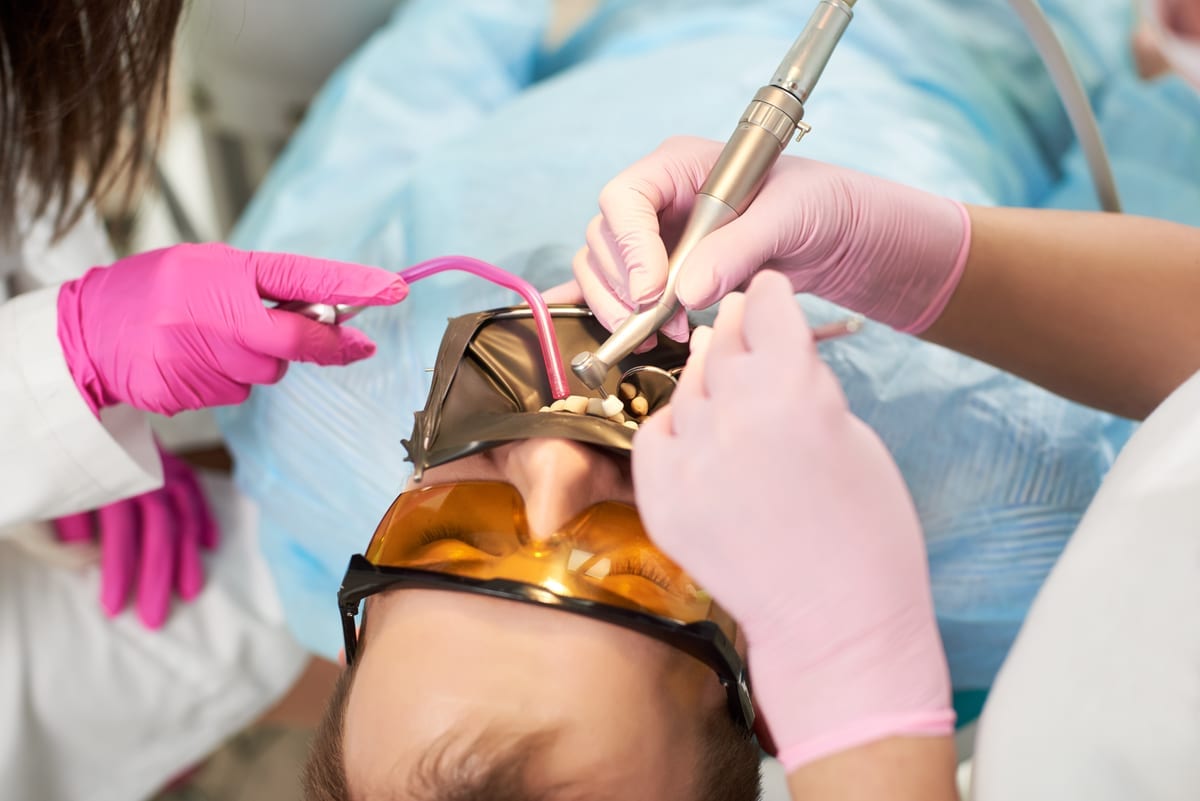
- Tooth preparation: A small amount of enamel is removed from the tooth so the crown fits properly and comfortably.
- Impressions: Digital or physical impressions are taken so the crown is custom-fabricated to match your bite and surrounding teeth.
- Temporary crown: A temporary crown protects the tooth while the permanent crown is being made.
- Placement: The final crown is bonded securely in place and adjusted for a perfect fit.
Most patients find the process straightforward and manageable. Local anesthesia keeps you comfortable throughout the preparation appointment. The final result is a tooth that looks, feels, and functions like a natural one.
For patients interested in how crown placement fits into broader smile goals, our team also offers Cosmetic Dentistry Long Beach services that can address aesthetics alongside function.
Conclusion: Trust the Recommendation — Your Tooth Depends on It
When your dentist says you need a crown, it is a clinically grounded recommendation — not an upsell. Whether the cause is a cracked tooth, a failing old filling, post-root-canal fragility, or a broken cusp, a crown is often the most reliable way to preserve your natural tooth for years to come. Dr. Anthony Mark Saad and the team at Long Beach Dental Health are committed to helping every patient in Long Beach understand their options clearly and comfortably. Book Now to schedule your appointment with our team.
Frequently Asked Questions
Does getting a crown hurt?
The preparation appointment is performed under local anesthesia, so you should feel little to no discomfort during the procedure. Some mild sensitivity after the anesthesia wears off is normal and typically resolves within a few days.
How long does a dental crown last?
With proper care, a well-placed dental crown can last between 10 and 15 years — and often longer. Good oral hygiene, regular checkups, and avoiding habits like teeth grinding help extend the life of your crown significantly.
Can I wait to get a crown if my tooth doesn’t hurt?
Waiting is generally not advisable. Many teeth that need crowns do not cause pain until the damage has progressed significantly. By that point, the tooth may require extraction instead of restoration. Early treatment preserves more of your natural tooth structure.
Is a crown the same as a cap?
Yes — the terms are used interchangeably. A dental crown and a dental cap refer to the same restoration. Both describe a custom-made covering that fits over a prepared tooth to restore its shape, strength, and function.
What happens if I don’t get a crown when my dentist recommends one?
Without a crown, a damaged or weakened tooth is at high risk of fracturing or breaking further. In many cases, a tooth that could have been saved with a crown will eventually need to be extracted. Addressing the recommendation promptly gives you the best chance of keeping your natural tooth.